Sponsor Me!

Currently, I'm publishing sporadically (as in, there has been a span of 10 months between the last post and the current post). I'd like to write and publish more. Unfortunately, I'm a super busy person, especially since I work a 9 to 5 job five days a week. If you want to help me free up more time, so I can write and publish more, please buy me a coffee or sponsor me through recurring Patreon payments (so you don't forget!).

Buy Me a Coffee at ko-fi.com


Become a Patron!


Showing posts with label identity politics. Show all posts

Sunday, December 02, 2018

Is The Left Dividing into Two Again and the Right Encouraging It?

Has the divide in the Left between the socialists and the pluralists risen again since the the midterm election? And has the Right been taking advantage of this rift to split them, especially in attempt to make them unattractive to the Center?

Social media provided me an initial glimpse with an out of proportion reaction to Alexandria Ocasio-Cortez and me:


Other than beng a reaction against Ocasio-Cortez, raising the topic of socialism gives an incongruous impression. What does socialism have to do with the border? Also, the statement about socialism leading to mass murder comes off as specious and misunderstanding that differences exist between the Democratic Socialism that we see in Europe today and Cult of Personality Communism of Lenin/Stalin, Mao, the Kim family, and various other instances in the past. Socialism and Communism don't equate to totalitatarianism, dictatorship and mass murder.

This incongruousness sent me to the Internet try finding an explanation to this kind of reaction. I think I glimpsed a whole bunch of other remarks like this about socialism on social medias over the last few weeks. Articles like these resulted from the searching:
Apparently I've been behind on seeing attempts at the Rightist rhetoric against Obama by the Right that tried to paint Obama as some evil socialist that threatened America.

Last night I walked into a gathering of friends that were obviously talking about politics from how the conversation ended. The one black guy among a bunch of white guys said, "Yeah, I get what you're saying, but I'm a black guy and I'm scared of the Right."

The conversation ended there, but as someone who puts Pluralism first and am experimentally supportive of more socialist schemes, I was confused. Not by the black friend, but by all the other friends in the room. I believe they are anti-Trump and that they appreciate the balance that the new House will bring. . .but I don't know, it's confusing to me. Once politics regress to the mean, how much people with privilege have the willingness to entertain a path that could lead to more control y a political party willing to support a fatuous demagogue, voter suppression, confirming the nominations of judges willing to all drastic change and disrespect of people, confirmation the nominations of cabinet members and department heads looking to destroy their departments, engage in corrupt spending of money, mangle facts and ignore scientific data, and willing to allow the destruction of human civilization, violation of human rights, and destruction of the Affordable Care Act with a million more little cuts?

Why would anyone be OK with enabling this destruction and disrespect?

I wracked my brain. Considering my friend based his argument to vote liberal on a social issue, that left another major issue that could scare people tending to the Center: the economic/socialist platform that has become associated with the Democrats through the Democratic Socialist wing. This article does an interesting job riling up the fears of Democratic Socialism: Democratic Socialism Threatens Minorities. I don't agree with this guy's argument, but it does illustrate the attempt to divide the socialism and pluralism sides of the Left.

Remember Steve Bannon saying "The longer they talk about identity politics, I got ’em. I want them to talk about racism every day. If the left is focused on race and identity, and we go with economic nationalism, we can crush the Democrats"? Did Bannon plan to divide the Left between pluralism and economic issues, or did he think that the Democrats would turn off the American public by talking about pluralism issues while his side tried to push for an economic plan?

Articles exist out there about how "identity politics" leads to people adopting group identities and destroying equal-rights individualism, of which this nation is based on. I found them randomly before, but I took hours to find this one: It Is Time to Debate-And End-Identity Politics at The Heritage Foundation. Interestingly enough, this article makes a connection between racial activism in the past with Marxism, which feels like a deep dive.

The Right, in its desire to hurt the Left, and the Center Left, in attempts to appeal to the Center, have taken some multi-pronged attacks. The Right has both united the pluralism/socialism stances into a unitary threat AND has also pegged them as separate menaces. Uniting the stances scares their supporters and those in the center inclined to triggering. Pegging them as separate menaces divides the Left, setting the Left to argue with itself over which issues will supposedly win elections and the hearts of the American people. The Right divides and conquers the Left while scaring the Center and their own Right the both pluralism and socialism are threats.

If the Right is pulling these rhetorical flourishes that divides the Left, how can the Left do better to realize what Ocasio-Cortez once said that economic justice and social justice aren't separate things? And once the Left can unite these issues and unite itself under multiple causes for justice, how can it demonstrate and convince the People that the Left will be able to address the issues that the nation faces?

I don't have any clear answers. This essay focused more about raising questions. My next essay might have something to add to the issues to connect with the People, though: National Pride.

If you like what you see here and in the past and want to free me up for more, support my endeavors by Buying Me a Coffee!

Wednesday, May 02, 2018

Twittervism & Taking the Side of the Marginalized

My default the last week or so has become burnt out between

  • Moving back at the end of November
  • The Christmas season
  • Taxes
  • Rebuilding my financial database
  • Writing when I have the wits to do so (generally in the morning before work)
  • Researching more than I should (slacking when doing more short and medium term things but still meeting deadlines)
  • A few attempts here and there to digitize some paperwork and organize/catch up on personal e-mails
  • and Random stuff here and there
Now that I've finished big things on that list (mostly getting tax paperwork submitted and rebuilding the financial database), I plan to get into re-organizing my time day-to-day. I'll probably get back to digitizing paperwork and organizing e-mails, but after I organize a huge pile of mail that's buried away somewhere.

Since the last entry, I've tried digging deeper into the topics explored there. I appreciate that entry and articulates my thoughts a the time, but I still have this urge to dig deeper to find more a psychological standard about the factors that push people to that level of dehumanizing others and feeling anxiety.

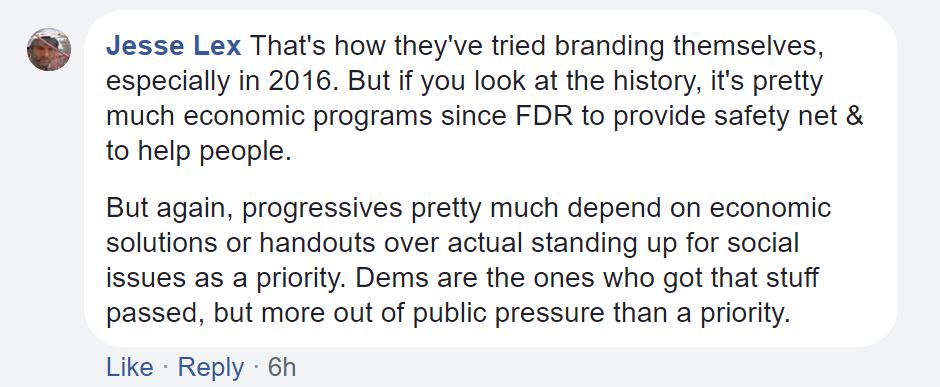
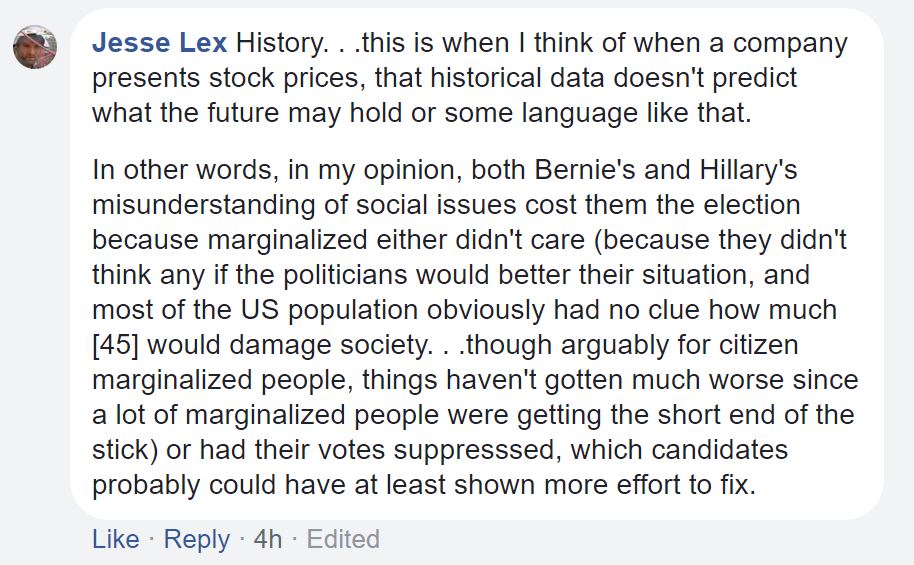
Other than a good social media discussion here that have helped me tune my thoughts a little bit more, I haven't done too much independent development of ideas other than reading and getting sucked into an Internet search and Wikipedia hole. With that in mind, check out my Twittervism with the addition of my side of a Facebook conversation that touched on some interesting issues:


Click on one of the pictures below to access the gallery of my side of the Facebook conversation:


If you like what you see here and in the past and want to free me up for more, support my endeavors by Buying Me a Coffee!

Sunday, April 29, 2018

Choose to Let Go of Status Anxiety and Open Yourself to Connection and Opportunity

This essay starts with some Twittervism to contextualize the topic.

Whereas


Whereas


Whereas

Whereas

Whereas

Whereas


Whereas


Whereas

Whereas

Whereas last night seeing a couple bits of the Mister Roger: It's You Who I Like PBS special,


Few people would dispute that we have strong tensions in the United States right now, and that these tensions have grown even tenser since the 2016 Election. Depending on the side stood on and perspective coming from, explanations for the tension differ. The Right seems to think the Left acts out of proportion to gain or keep power, taking the form of a Deep State, obstructing appointments and policy, fact checking the Right, criticizing actions and policies of the Right, and exposing people on the Right to variety, diversity, and ways of life that are different.

From the perspective of the Right, I can see how they might reach this conclusion. Their criticisms of the Left and marginalized populations/communities acts as a mirror. Instead of admitting their fear and hate, they point out things that non-Rightists do as bad things, even though the Right did these practices themselves (obstructionism, heavy criticism of the Left through Fox, literature one example being Peter Schweizer and Government Accountability Institute, and through online news sites like Breitbart, and physical violence against marginalized communities/populations) or have adopted practices of non-Rightists for themselves (criticized safe spaces but now getting all worked up about "alternative lifestyles" being forced onto them, fearing violence from the "other side", and trying to adopt their identity as a marginalized community/population).

In reality, though, marginalized communities have a long history of having to defend their lives and having to fight and take risks to

  • Get and keep a job
  • Participate in politics and civic life
  • Own property
  • Have relationships that they desire
  • Honor their heritages and backgrounds
  • Have meaning and significance in their life
  • Have dignity and integrity
  • Express their complex identities in the everyday
All the while wealthy, influential straight cis-gendered Christian white people (mostly men), the privileged, have had the most power to determine the boundaries of what can and cannot exist in the boundaries of the United States. In the past, when laws and norms didn't protect marginalized populations/communities as much, the privileged could exert violence more openly with impunity. Now that violence is done

  • On a micro-level
  • Done by someone who the Right disowns and calls nuts
  • Or exerted by an officer of the Establishment
Then the Right

  • Throws up some flimsy excuse
  • Dismisses an actual problem that exists
  • Argues that their First Amendment rights are being stamped on
While not giving a crap about other people's rights or lives.

Layer on top of that, [45] trying to undercut the media and the Department of Justice (DOJ) while the GOP doesn't do their duty to keep him honest because they feel too attacked by the media. Even Senator Bob Corker, one of the few on the Right who criticized [45] for his bad behavior (if not his policies), mended fences with [45] after the media criticized Corker of changing his vote on the 2017 Tax Deal after getting a sweetheart deal in it that did nothing for regular, normal tax payers.

I will keep my criticism of undercutting the DOJ and the media short. For one, it makes [45] and others on the Right hypocrites if they criticize Venezuela, Russia, and other tyrannies for suppressing the media and free speech. The same holds true if they accomplish the goal of cutting down the oversight of the DOJ and media. The government has already expressed the desire to persecute protestors and other critics that focus their aim on his behavior and policies. Want to live in

  • A Stalinist tyranny
  • Dictatorships like Saddam Hussein's
  • Turkey these days
  • Egypt after overthrowing the Muslim Brotherhood
  • North Korea?
I bet you, the reader, can think up plenty of your own examples of horrible political regimes that have nothing against using their law enforcement to persecute the press and anyone else who disagrees and criticizes them.

Some people like to focus discussions on the bad policies rather than the behavior. If no one focuses, diffuses, or attacks the behavior effectively, that behavior will lead to suppressing the people, their speech, and head us into the direction of tyranny, dictatorship, and totalitarianism. In many ways, this blowhard's behavior offers more danger than the horrible policies from him and the GOP.

I could go on forever with criticism of [45], the GOP, and the Right (because we have at least a few, if not plenty of, Democrats that would fit into the Right. . .at least in Chicago and Illinois). The first Twittervism of this entry makes me think otherwise, though. The episode of Invisibilia tells the story of the UN putting on an American Idol-ish reality TV show in Somalia to try spreading Democratic values and emboldening people to live more Democratically in a nation still fraught by a strongman society. Apparently, American Idol-style reality TV simulates a lot of Democratic-style practices, like

  • Voting
  • Competing
  • "meritocracy"
  • Campaigning
History has also shown that cultural entertainment can go a long way to fighting tyrannical societies and governments by giving the people in those countries an alternate way of life to aspire toward (apparently a lot of North Koreans have defected after enjoying some Western entertainment).

This episode of Invisibilia made a cutting statement that argumentation will more than likely cause resistance on both sides as they try to stratify their viewpoints. We like to think that rational and reasoned out argument will help the other side reach a breakthrough then be won over. Argumentation, per Invisibilia, however, does not fulfill our hopes.

Instead, psychologists in '90s found that poetics, drama, literature, and influencers of emotion, if you will, have a better effect on changing people's minds. This revelation won't stop me from engaging in argument, at least not in the short term. Engagement still needs to happen and rational, reasoned argument still needs to occur to fill in vaccums that could occur after poetics. Also, I don't have any short term poetic strategies that I feel confident enough to use on the fly, though I won't hesitate to practice with them when inspired. . .especially if poetics and argumentation can mix and match.

I might have even stumbled onto some mixing of poetics and argumentation over the last week, based on the research I've been doing for my project and the Twittervism I've posted today. I have to go back about sixteen years first, though, to either a distinct memory I had or an amalgmation of memories that I combined into an imagined memory. Back then, I had gotten myself into the deep end of not having a clue of how to move forward with my project (sometimes I feel that way in the present, but it happens more when dealing with particular, concrete instances rather than the overarching argument).

My problem came down to the argument of one person's utopia being another person's dystopia and that utopia can't ever really exist because human nature, the human condition, and so on and so forth leads to disagreements. The history of utopias, dystopias, and just the fact of our world have not provided any proof that a world of all happy and all virtuous people can exist. I'm not saying that it can or can't exist, I'm just saying it hasn't existed nor has any imagination truly imagined such a world to realization. Pick any utopia and anyone can poke a hole in it. Somewhere in that utopia, someone gets screwed.

To me, a eutopia (quick etymology lesson: Sir Thomas More combined the Latin word u-topia with the Greek word eu-topia for the joke of his book pretty much translating to "no place" [u-topia] and "good place" [eu-topia]) is a place where everyone has

  • Their physical needs met
  • Their emotional needs met
  • Feels welcomed and appreciated, if not fully embraced by everyone for who they are
Disagreements and such could occur, but people wouldn't resort to, as a viable acceptable norm to deal with anger resorting, violence, physical, verbal, or on a micro level, or rejecting people's humanity as a way to exert power. Once someone feels they can resort to violence or rejecting someone else's humanity, they hurt that eutopia. Self defense to prevent loss of life, limb, or ability is allowable because the possibility exists that someone feels they can resort to violence or rejection of humanity. In addition, respect for humanity and non-violence extends to non-citizens, too, and does not necessarily default to "keep out until proven worthy" for people who want to visit or live there.

I expect some would see my willingness to go further in protecting non-humans in eutopia as radical, and I'm willing to work with that opinion about me. After all, this is my eutopia, which restricts me from trying to enact it forcefully onto the real world. My eutopia requires me to non-violently convince others through argumentation or poetics, not through force. You have nothing to worry about coming from me, unless, like some on the Right, you become over vigilant by my

  • Exercising my beliefs in the world around me
  • try to act as example of what I believe is a better world
I've tried backpedaling from my ideal eutopia in the sixteen years since that distinct memory and have completed a few essays. The last essay has been a sticking point, though. I have been able to use ad hoc arguments, the latest argument being about the importance of meaning and feeling of significance. I wrote many of those essays about fictions and communities that had distinct situations of

  • "us" vs "them"
  • "us" vs "the world"
  • or even where divisions occurred within communities in which arguments between the sides could easily be parsed and weighed against each other
The last essay hasn't proved so easy, though. Historical texts don't clearly spell out

  • Concrete goals
  • Methods for reaching goals
  • Arguments of real life observations/facts
  • or Even relatable theories that guide people to set up things in a certain way or to interpret things in a particular way
I've had to do a lot of outside research into theory that these people from just under 200 years ago wouldn't have even conceived. I've had to research other things they have referred to. I have to try understanding their actions and behaviors before their attempted utopian community. My studied imagination has spanned continents and centuries after the utopian attempt and before the time of which I'm writing about.

In many ways, it has pushed me to study human nature and the evolution of human nature since this eutopia wanted to provide an example for the world to follow to become a better place. The leader of this utopia would have liked to eventually break down walls and bring people closer together. Even before trying to realize his utopia, what may have encouraged him to try realizing the utopia, he tried breaking down barriers by

    Ministering to the poor
  • Opening viewpoints to make his religion more palatable to the poor and those in the American frontier
  • To try convincing the privileged in his circles to do so
Those attempts failed. Sadly, the failure of his utopia caused enough despair for him to give up on any such lofty goals.

This man and the milieu of social stratification in which he existed, along with our current situation, and the two centuries in between, has pushed me into a lot of deep dives into trying to understand

  • Prejudice
  • Bigotry
  • and just a bunch of issues of sociology, social psychology, and social philosophy, including what has brought about social and cultural change
I have wanted to find a good argument or, if anything, an approach of poetics, that would go a long way to convince people that bigotry and hate hurts them, even if they have the upper hand and privilege.

Tilting at this windmill has its risks. Approaching hate and bigotry as something to try understanding could lead to people on the correct side thinking that I believe hateful, bigotted people deserve empathy or sympathy, especially since I'm painting them as ignorant and just need to give them the right answer to turn them around, when many hateful bigots will stand their ground harder and harder the more you try convince them. I understand that, plain and simple, most bigots will probably never change their ways and will probably keep trying to exert their hate and bigotry on the world.

Another risk is that I have yet to find an argument about bigotry that doesn't assume the conclusion. This approach often leads to

  • Doing good for the sake of it being good
  • Talking solely about strategy
  • Having it become a realpolitik issue of interest groups vying against each other
Sadly on that last item, honestly, the Right has mastered it. If those resisting the Right continue to buy into it, the Right will likely win because they're controlling the vocabulary, grammar, and syntax of the fight.

I would be remiss to say that marginalized people have to follow my approach. They're defending their

  • Lives
  • Dignity
  • Rights
  • Integrity
  • Humanity
Just to stay human and alive, they have to fight for all of that every day to an extent that I can never imagine as someone who generally has all the characteristics of privilege. A good deal of marginalized people are fighting for survival, physically and spiritually. With survival on the line, doing the right thing, just because it's right or for a good reason, is a luxury. I won't disaparage someone for doing what they really need to do to survive and defend themselves.

Which actually gets me almost to the focus of where I've wanted to go. Language and perception can get tricky. Nazis and White Supremacist believe that there really is an inevitable race war (even though they're the ones starting it), and that they have to fight it to survive and defend themselves. I believe they're wrong, but their belief shows the trickiness of language and perception.

As much I pour scorn on The Atlantic for using "status anxiety" as a euphemism for bigotry, the term actually provides a constructive way of looking at bigotry. The term could possibly provide me a good argument for the damage that bigotry causes the bigot, themselves. By embracing bigotry, they take on themselves a whole mess of anxiety they don't need.

One way to relieve the pressure of anxiety is to accept that there are just some things that a person can't control, like other peoples' thoughts, emotions, and in a reasonable world, their actions. To a bigot (and abuser), those parts of people are open game, the bigot can see those things as controllable and can be annhilated. Some places these days have norms and laws that are supposed to prevent, but in a society that believes in these things being right, it can be ugly.

My diving into argumentation generally ends there, in the fact that someone in a society that backs their bigotry and if that bigot works everything right, they can mold the world in their image. This point is a hypothetical because no one has molded the whole world into their image. The Nazis were defeated. Slavery is generally not an accepted practice by the powers that be in today's world, even if it still occurs in an underground fashion away from the eyes of authorities. Some genocides may have had 100% success, but no ethnic group has yet ever wiped out or gained full domination of ALL OTHER ethnic (phenotypic) human groups. And as we see in how much societies and religions don't make sense, people in a group will inevitably disagree, will divide, and will get to violent fighting over the littlest thing over the sake of being right and pure. They will create new ethnicities/phenotypes.

All that investment into being right and winning leads to a lot of worry, risk, and anxiety! Humans have a thing about ranking the status of themselves, whether individually, as groups, or as a species against everything and everyone else. It's part of the human tendency to essentialize, which we instinctively do from birth then become able to discuss verbally a few years later.

Expanding on the ideas from David Livingstone Smith's Less than Human: Why We Demean, Enslave, and Exterminate Others, religions and schools of thought have thought up spiritual/immortal caste systems, from the Hindus to the Christian Great Chain of Being. Even without necessarily a religion backing a system, Aristotle, the Humanist, even made arguments of what ranked higher and lower based on how "rational" they are (which even just common sense of today would shatter, since a lot of Western history's demoting women was based on Aristotle arguing women weren't as rational as men).

Religion has a bad precedence for framing reality and society. Just look at the religious wars that occurred in Europe over the "right" Christianity and the "right" monotheistic religion based around Yahweh.

Look at what a lot of the warring factions in the Middle East over the "right" Islam and the "right" monotheistic religion based around Yahweh.

Look at the disagreements over Judaism in Israel or the different interpretations of Hinduism, Buddhism, and other religions in the East.

Philosophies and science don't have the best record. Maybe they don't start as many wars and battles, but they're constantly changing as the perception of humanity increases.

Even just spatially, we have such a small miniscule undersanding of reality, we are fated to destroy ourselves and the Earth around us before making any meaningful progress out to other worlds, just to establish that one group knows better than the other group.

How can we know the actual right, true path or belief and be willing to die for it when human history is full of those KNOWING the actual right, true path then leaving a wake of destruction. . .or not really knowing, but then others in the future discounting their idea of the actual right, true path or belief?

With the human propensity for ranking ourselves against each other, other species, and other objects, status anxiety as a source for bigotry makes sense to me. Unless people check themselves, they will find something to fight about, even if it's just about being on the side that ranks higher than the others.

Sometimes martyrs will occur, but those without the means to win will often know they can't win and not fight back until they're pushed back into a corner. Other groups of those that can't win, especially if they're close enough to the privileged dominating group, will generate stories to tell themselves that those on top are looking out for them or that if they work hard enough or act in certain ways hard enough, they will gain the power to make it to the top, either by joining the privileged group or by defeating the privileged group (Marxism is just a ideology of one interest group taking over from another one). Or maybe they can have enough learned helplessness that they're just happy to be alive. Some groups accept that they won't rank that high on the same scale, but they can create their own alternative scale and parallel social world to make a comfortable enough rank for themselves there.

Reaching this revelation yesterday that the term "status anxiety" has some use, I broadcasted on social media the idea that we can check our privilege (it bears repeating):


From my college years explorations of other viewpoints, I found Americanized Buddhism/Hinduism and Twelve Step programs especially useful (I have plenty of issues with how both can be practiced by some groups or people, but both of them have some good ideas, including take what works and leave the rest). I still had and have some growing and wisdom to learn. Learning that it is possible to let go of some anxiety helps a lot, especially after

  • Learning to properly gauge what you do and do not have power over
  • And possibly even more important: what is worth having power over
Frankly, I determined that it's not worth having to force my power over something; influence and persuasion within moral and ethical norms, maybe, but not force. Forcing power over something just leads to anxiety since you'll always to have gauge when and how much force to exert, while also worrying about possible backlash and predicting when backlash may occur. Vigilance is tiring and anxiety-inducing.

On the flipside, though, we can find real connection, understanding, and bonding if we let each other go, and we come back (or all it takes is a reminder that we're around for the other person to stay connected). And is it really worth pushing and pushing to try keeping something when it requires so much effort and risk?

I might have adopted a stoic attitude at some point in life.

I acknowledge that some people do have

  • Clinical anxiety
  • had Traumatic pasts
  • and Plenty of things
that lead them to not have the choice of letting go of anxiety.

These days I still have to deal with my own demons, especially since I have so many projects and things that I want to get done but get in the way of the practices like

  • Meditation
  • Personal journaling
  • Other exercises
that helped me work through my hang ups and anxieties.

In the end, though, despite the human propensity to ranking and bigotry, I believe that we human beings can choose to let go of the anxieties and propensities. Maybe it takes some work, especially after living with these thoughts for a good amount of time. The first step is just seeing the damage status anxiety does to you and deciding to put an end to it, choosing a life of control over your thoughts, emotions, and propensities.

Don't worry, you'll find a lot of support once you drop your barriers and open yourself to connect to other people in a welcoming fashion. People are now trying to defend themselves and their souls from you and your anxious anger presently. Humble yourself and see how your status anxiety has caused damage, and I'm sure you'll find it rewarding, worthwhile, and who knows, opportunities might abound and you may discover things you never knew about yourself.

One tip, though: don't go looking for forgiveness from those you have harmed. That will likely cause further harm. Seek your own absolution by fighting against bigotry and status anxiety other people have. Seek your own absolution by working to make the world a better place. Show your growth by your actions, not your words. You may never get forgiveness from the people in your past, especially if you've caused lasting harm, but you may learn to forgive yourself by helping the world be a better place.

Or live with your anxiety, vigilance, fear, stay the same, and miss out on the warmth that the world can provide. Every person gets to make their own choice.

Me, I choose life, openness, warmth, and connection.

If you like what you see here and in the past and want to free me up for more, support my endeavors by Buying Me a Coffee!

Thursday, January 11, 2018

Exploratory, "Playful" Essay into Social Bonding & Fighting, Authoritarianism, and Wondering About the Rise of Minority Influence

I want to write more of a philosophical, maybe spiritual and psychological essay tonight. I write this in a form of exploration and play, not authoritatively. Through the process, I have discovered some questions, a hook or two, and yet another direction to do some research for my projects. It's endless, I tell you. But I invite you to come along on this journey with me, and to contribute if you have anything to add.

A typical question I ask myself on a regular basis: Why do people come together to form societies and cultures? What keeps them together?

For my bachelors project, I've given myself a high bar to evaluate an all encompassing universal hypothesis to tack on it: Would this theory for good behavior convince a Hitler, a Stalin, or any other horrible dictator to act better (even a [45], who sometimes feels like a wannabe dictator)? I don't justify what they've done, but the the end of their reign, any chance of a good reputation, or their ideas not spreading mostly occurred because of circumstance.

I'll admit, I'm not too familiar with Stalin, and his oppressive tactics continue to be used by dictators. Nonetheless, there are enough people on "both sides" that his legacy has become a norm, and even ostensibly has become accepted as a horrible reputation among many, to be avoided at all costs.

Many would argue that Hitler's downfall came about because Nazi Germany turned on Stalin's Soviet Union. Germany basically turned World War II to war on one front to a war on two fronts.
But then add the United States entering the war, with a fresh army compared to the armies of other countries that had been beat down by Germany and Italy. Without this combination of events, Fascism likely had a good chance of taking over Europe, Asia, and possibly, in a little more time, America.

And frankly, with the anti-semitism in the whole world at the time, the biggest outlying characteristic of Germany and Nazism versus the rest of the privileged populations of the world at that time was more about their organization and success at war for a time. The rest of the world seemed to have more a problem with Nazi Germany having success at winning the fight for their bigotted interest than with Germany being bigoted in the first place. Some may argue that the reaction to Nazi Germany's success created a turning point in at least liberal demoracies, creating a momentum of norms against anti-semitism. Philip K Dick may not have had to use too much original imagination when he wrote Man in the High Castle.

Another crazy circumsantial turn of events and norms: the turn against chattel slavery in the United States. I've spent a fair amount of time trying to trace the growth of people feeling that chattel slavery is unjust in the United States and how it brought the country to the Civil War. I still haven't had the luck or research skill to find how this momentum of history grew and came to fruition.

At least a minority of white colonists or even just inidividual outliers existed that spouted against slavery or tried convincing people that it's an evil practice, but no one took them too serious until a few years or decades before the Revolutionary War. Then up in New England, at least, some of the Founding Fathers before the country's founding wrote against slavery and sometimes took legal and rhetorical action against it.

As tensions grew against the British, New Englanders felt that Parliament levied too many taxes on them, everyday townspeople wrote town-wide Declarations of Independence arguing that they felt England was treating them as slaves, and they wouldn't take such indignities. The momentum to outlaw chattel slavery became adopted by "regular" white people through a rhetorical flourish that justified fomenting revolution, which then entered the nation's zeitgeist. I still haven't isolated where all that came from, though I have the feeling that it came from the rising tensions of Absolute Dictatorships in Europe disrespecting national/ethnic cultures, instead trying to build strong states without nation.

No matter the occasion, though, I feel like only historical circumstance has prevented authoritarianism from spreading all around the world. It reminds me of the trope of a child thinking "As long as I don't get caught, I can get away with it." Do dictators just not totally succeed and create an everlasting legacy because of their personalities, because they can't trust anyone else enough to hand off their nation that can possibly become an everlasting monument to their family or something like that?

In some way, North Korea feels like a success when it comes to dictatorship and leaving a legacy of an authoritarian system in place. We're in the third generation of the Kim's since World War II. Many in the world might think the Kim family has a strain of crazy megalomania, and that country might grow more and more isolated in world that simultaneously grows larger and smaller at the same time.

Seventy years after installation, though, North Korea remains with the same authoritarian structure. I'm not very familar with the history of North Korea, but it could very well have gotten stronger if China and the Soviet Union/Russia had given it even more support than they had throughout the years or if China and Russia hadn't spread themselves thin during the Cold War. At the same time, would those larger, stronger country really wanted to have dealt with the Kim family?

With the inreased reent development of nuclear weapons in North Korea, though, the country could grow and sustain the Kim family structure of authoritarian government, possibly the longest authoritarian and maligned country in at least the United States consciousness. Will they "get away with it" if they become a nuclear power and other nations fear them? Even now, if they could release utter destruction on the Korean peninsula with conventional weapons, would they be "getting away with it"? Has the Kim family bucked the trend of circumstance of history that seems to turn against authoritarianism (even China, which has successfully kept something of a stable, steady regime through the decades has been making "compromises" to grow and fluorish, at least economically).

[At this point in an edit run through, I tried finding some analagous phenomena regarding novelty and evolution for the sudden appearance of novelty when too much order occurs. I got that idea from a magazine article I read something like 15 years ago. Couldn't find anything useful, but I found some interesting research hooks that are pointing me toward minority influence, Serge Moscovici, cryptomnesia, and other threads looking at norms changing via phenomena similar to how I'm describing in this essay. For now, I'm just going to have to accept randomness occurs through novel circumstances. . .and plan to fill the conceptual space missing to me at a later date.]

I don't have the knowledge and expertise to get into all the details and come up with historical or even psychological arguments for all these situations. Nonetheless, from the standpoint of minds very different than mine that disgust me, but based on historical, philosophical, psyhological, and other trends I can't identify, being an authoritarian jerk with a plan to create a legacy of a nation state that can continue a legacy of acting badly, violently, horribly, domineering, and so forth seems like a rational direction to go if someone can get away with it.

Just because it hasn't succeeded before doesn't mean that the person deciding to do it can't get it done. The people before just weren't smart enough, they didn't think of all the contingencies, they didn't plan well enough, they weren't charismatic enough. People full of pride, narcissists, can make plenty of arguments for why they're so special that they'll succeed where so many others have failed before. Note that this paragraph is me putting myself in someone else's shoes.

After all, the route of sharing, working with other people, democracy, republics, etc. etc., these are systems and practices in which you need to work with others, people need to depend on each other. They need to trust each other. That requires people to let their guards down and make themselves vulnerable. Even for people who believe in democracy and rule of the people, doing such things has its difficulties. Not just because people might turn on you, but because other people might make mistakes or not have the capability to complete what they're supposed to do.

Successful authoritarianism just requires being the first one to get IT right and be able to handle all the contingencies. Plenty of people have enough of pride to think that they're the chosen one to make it happen, and they can also get a base to support them. [45] got into office after all. Then throw on top of that uncontrolled emotions, the ease of manipulating the emotions of crowds, etc. etc. As much as I would hate to see sustainable authoritarianism happen, a sustainable democratic utopia of happiness would probably be harder and slower to make, though more rewarding.

The latest Doctor Who Christmas Special, "Twice Upon a Time", has a great line that I think summarizes my feelings about all the above. I have complicated feelings about Steven Moffatt's writing on Doctor Who, but I had the feels when I heard this long line because it felt like it described me:

DOCTOR 1: There is good and there is evil. I left Gallifrey to answer a question of my own. By any analysis, evil should always win. Good is not a practical survival strategy. It requires loyalty, self-sacrifice and er, love. So, why does good prevail? What keeps the balance between good and evil in this appalling universe? Is there some kind of logic? Some mysterious force?
-Copied and pasted from transcript of the episode found at http://www.chakoteya.net/DoctorWho/36-13.html
I don't have answers to that big question. Maybe I will some day, more likely that I won't. Lately, though, I've run into some thoughts and theories that provides some insight into societies, democracy, civic republicanism, and "rational" arguments for people coming together. I don't know how original any of the following is, but I feel the need to put some random thoughts out there, play with them, and possibly get some insight from my audience.

Last night, I listened to Episode 49 of APM's podcast, Make Me Smart with Kai and Molly, titled "Gerrymandering, hard-wired brains and the baby under the desk". Kai and Molly revisited episode "12: This is your brain on Trump" where they had on George Lakoff, professor emeritus of cognitive science and linguistics at the University of California, Berkeley. Professor Lakoff discussed our instinctual brains, [45]'s sophisticated use of rhetoric and Twitter to manipulate the minds of his base by appealing to their need for a "strict father". Lakoff mentioned three other strains of appeal that connect with the instinctual mind, I believe. One of those three stuck out as the opposite of strict: the language of the nurturer. The following quote from Lakoff's essay, "Why Trump", I think gets to the brass tacks about the strict father:

[. . .] The basic idea is that authority is justified by morality (the strict father version), and that, in a well-ordered world, there should be (and traditionally has been) a moral hierarchy in which those who have traditionally dominated should dominate.

[. . .]

Family-based moral worldviews run deep. Since people want to see themselves as doing right not wrong, moral worldviews tend to be part of self-definition — who you most deeply are. And thus your moral worldview defines for you what the world should be like. When it isn’t that way, one can become frustrated and angry. [. . .]
Read the rest of the essay, Professor Lakoff has some good insights into the minds of traditional conservatives. I hate how much truth this reflects and want to fight the mentality that many traditional conservatives and reactionaries embody. On Make Me Smarter, Lakoff discusses the difficulty of changing the minds of people who take this kind of mindset, and even people who take the nurturing mindset won't have their minds changed if they're approached in a way that goes against their way of framing the world.

As someone trying to get as close as I can to writing a novel or some piece that might convince even a Hitler or a Stalin that they're framing things wrong, I guess I need to understand this type of thinking more. Seeing that I might have to take such an approach brings me to the end of my next random thoughts that I've mulled over the last couple days, but we'll need to start at the beginning.

Back in the spring of 1998, I wrote a set of two college papers during my sophmore year that compared and contrasted Jesus of Nazareth's Kingdom of Heaven and Thomas Hobbes's Leviathan, a social contract theory of giving up natural liberties to a monarch for security in society (because fully free people in nature would be in constant war with each).

I finished the book Citizenship & Community: Civic Republicanism & The Modern World by Adrian Oldfield a couple weeks ago (don't worry when you see the price on Amazon, I borrowed it from the library). It defined civic republicanism, did a quick survey of some "classic" thinkers on the topic, then made some final conclusions about requirements to make it work. The book has some useful information and a bit of useful insight, but I don't accept it hook, line, and sinker.

Oldfield's discussion about Alexis de Touqueville's view of republicanism and praising of early 19th-century United States brings up social contract theory, but discusses it in a novel way to me. Instead of talking about Social Contract theory as GIVING UP liberties, Oldfield talks about joining together with other people in a community, society, nation, etc. as a way to FREE ourselves from the dangers and destruction of the natural world. The peace and collaboration of civilization allows us the ability to do so much more than we could in a State of Nature where we have ultimate freedom. In civilization, we're not totally obsessed with survival and putting all our energies into surviving (I'm not saying that our nations and states are civilized enough to help us reach this freedom).

The sacredness that Christians put into Jesus of Nazareth sacrificing himself on the cross always confuses me. It still does. Please bear with me because this will relate to social contract theory.

On a secular level, Jesus of Nazareth provides an interesting allegory. Jesus of Nazareth sacrifices himself on the cross to provide us the potential to gain freedom from Original Sin. In a way, through this sacrifice, Jesus provides an example that by giving of ourselves to the rest of us, we can find freedom from the suffering of nature. Jesus was selfless on the cross for us, we can be selfless in civilization for each other.

Another Jesus of Nazareth story always fascinates me: Pilate asks the crowd whether they want to free Barabbas, the violent political revolutionary, or Jesus, the peaceful revolutionary of the mind and soul, and they choose to free Barabbas. The Bibles of today hide the fact about Barabbas being a political revolutionary, pretty much just saying that he's a violent murderer.

When the part about him being political revolutionary gets brought up, the power of Jesus of Nazareth as a historical figure and the desires and consciousness of the masses becomes more poignant: Jesus brought true but long and difficult change to the people so they might possibly establish a long lasting peace because they have peace and collaboration in their hearts. Barabbas offered change, too, but just a surface change, a change in the position of a group of people in a society, something that they might accomplish faster but also more likely to lose.

As I addressed in the first few paragraphs of this essay, Barabbas offered a change of circumstance while Jesus offered the chance for more lasting, sustainable change, though a harder change that requires more effort because it required changing your identity and soul. The crowd chose to free Barabbas. Barabbas allowed themselves to stay the same for the possibility of changing outside circumstances. Jesus, however, requires the crowd to lose themselves to establish themselves, to establish a Kingdom of God.

Adrian Oldfield and many civic republicans talk a lot about the importance people's obligations and duties to society, in opposition to liberals arguing for rights and liberties of individuals, especially to grab hold of the rights of the oppressed and marginalized. Until I took a more serious look into civic republicanism that argued against liberalism, I didn't see these two positions as opposite sides to a dichotomy.

Reading academic, nonpartisan essays about political philosophy, I had understood rights as "fundamental to civilization". After all, the first sentence of the United States Declaration of Independence says:

We hold these truths to be self-evident, that all men are created equal, that they are endowed by their Creator with certain unalienable Rights, that among these are Life, Liberty and the pursuit of Happiness.
Rights, as academic political philosphers understand them, require the obligation or duty of other people to respect them. I can't agree with rights being self-evident or unalienable, since if other people exert enough force, physical or social, on someone, they can take those rights away. We see it happen it authoritarian countries. It happened in the United States with chattel slavery after the Declaration of Independence that argues for these unalienable rights.

I advocate a lot for equal rights and liberties that civilization can provide to all humans, but for them to exist, the other people in communities, societies, nations, states, and civilization have to accept the obligations and duties required to grant those equal rights and liberties, rather than seeing society as fighting for the interests of your self and your chosen and unchosen groups. This type of situation can break out into a State of Nature at any time and causes a ton of stress, which defeats the purpose of coming together into a civilization.

At the same time, however, Christianity and other social arrangements have a history of one internal group or person sacrificing or giving up their rights, just engaging in obligations and duties to support the rights of others who have a higher social status. At the same time, that dominating other gets to exercise all the rights they want without feeling any obligation or duty toward the people sacrificing their rights.

That's pretty much what authoritarian leaders like Stalin, Hitler, Mussolini, Hussein, and plenty of aggressive and/or privileged interest groups do out there: take, take, take all the rights and benefits that they can while the other side sacrifices, sacrifices, sacrifices to meet obligations and duties to the other person, party, or group interest that lords over them.

We have norms that justify enabling domestic violence to create this social arrangement. Privileged people in our societies believe norms that create this kind of social structure. When interests are equal enough that one side can't win but they can't see eye to eye, they fight to become the dominator, to get all the rights while the other side has all the obligations and duties, and they have ideologies and norms that tell them that this OK, people tell themselves that it's normal and good to create these tensions, so they can try to be on top, so they can create the circumstance where they come out on top and "get away with it".

To the depths of my soul, I can't accept this. I can't believe any side can have true happiness or contentment where there is all this tension and vying for power and property, even though the fighting and take can get exhilirating, filling people with adrenaline. But we have studies and anecdotes that show that praying for peace creates contentment in us, meditating on compassion for the world brings monks contentment, making connections with other people gives us rushes and exhiliration, and doing good acts for others can provide us euphorias and highs that can rival psychoactive drugs for intensity, length, and even for our inability to build resistance against the joy of giving selflessly. Humans were made for emotional attunement and protecting that attunement from loss.

And yet we can also debase our integrity by giving too much and other people taking, taking, taking, feeding their neverending desire for more and more illusionary connection, debasing themselves of having actual emotional attunement. I understand that we can't just focus on duties and obligations because in giving too much, we start losing; but at the same time, if we focus too much on rights and liberties, when we take too much, we become overfilled with stuff, losing the ability to sense happiness and contentment, but thinking if we just get more and more, we'll eventually get our fill, except we won't. It's like in a society of affluence: eating too much junk food is ingesting fake, artificial sentiment and connection that our souls don't know how to get any nutrition from it, so it just keeps taking, taking, taking in empty emotional energy, but it keeps getting starved of nutritious emotional energy.

The other day, imagining a world where everyone focused so much on giving to each other that it became effortless and the rights and liberties came out of nowhere, I had that feeling of world-embracing love. I also had some righteous anger at [45], his base, and others who focus so much more on all the taking and not seeing how they're hurting others with all their taking. . .an anger that wanted to figure out how to get them out of power, so we can go on learning how to teach giving and getting to real emotional attunement.

Other than polticking here in the United States, connecting to people, learning, and sharing with people, I don't have any good answers. I want to keep going, though, and hopefully I'll find a way to contribute to other peoples' consciousness and also to civilization so future generations can do a better job than what we're doing, if we don't destroy ourselves in the process.

If you like what you see here and in the past and want to free me up for more, support my endeavors by Buying Me a Coffee!

Sunday, January 07, 2018

Nerdy Productivity Frustrations and The GOP Doesn't Mind Hurting Citizens

Today I discuss some Nerdy Productivity Task List Frustations and that the GOP Doesn't Mind Hurting Citizens because Citizens Haven't Voted.

Nerdy Tech Productivity Frustrations Over the Last Couple Days

I've had an avoidable rough last couple of days. My productivity system of handling my to do list has hit a roadblock because months and months ago, Google decided to no longer include reminder alerts on their Task list.

I had what I guess was a pretty typical syncing system set up between Microsoft Outlook 2010 on my computer through Gsyncit, Google Calendar/Task List, and GTask on my phone. At one point, I noticed that GTask didn't have reminders, so I switched things up to have Gsyncit sync tasks to a Google Calendar. That doesn't work well, either, because even though it has a reminder set up, it doesn't cause an alarm to go off on my phone. I can make these things work if I edit al of it after syncing them, but that pretty much makes the whole system worthless.

I've figured out how to set reminders on Google Calendar. I found the Reminders app on my phone. I've spent a lot of wasted hours Friday morning and late into the night trying to figure out some way to sync things to Outlook. I even upgraded Gynscit and have ended up just e-mailing their support to see if they can add a feature to add a feature to sync with Google reminders. We'll see if that works.

I don't even know how well the phone Reminder app will sync with Google Calendar. With so many podcasts on my phone, I don't have enough space on it to do normal sync functions. Guess I'll just have to go on another podcast binge listen to make space and see if at least that part of the syncing works.

If anyone knows how to sync between Outlook 2010 and the Google Calendar Reminders (not the task list), please let me know. I really like having an offline mailing list on my laptop, so I don't have to be so dependent on the Internet and also because using an actual big keyboard makes for an easier time compared to typing on a touch screen (with this whole hang up and the physical keyboard, I find myself missing the old Blackberry).

It's been practically another day since I wrote this section. No good solution has been found. If anything, I've discovered that the Google Reminders on Google Calendar doesn't sync with anything, so there's no useful syncing happening. Who knows if that will ever happen.

Instead I've come to use a horrible workaround: Samsung SideSync. It projects the mobile phone view to my laptop and allows me navigate using the laptop. It doesn't allow for the ease of syncing and makes data in the task app vulnerable since there's no backup, but it's better than nothing. Next step: Finding a program to backup data onto the laptop.

I hate workarounds. Though I guess on positive flipside, can do texts from the laptop instead of having to flip between laptop and mobile. At least there's a bright side.

Return to Top

If you like what you see here and in the past and want to free me up for more, support my endeavors by Buying Me a Coffee!

The GOP Doesn't Mind Hurting Citizens because Citizens Haven't Been Voting

Last week a friend asked the social mind on Facebook how the GOP could get away with taking the teeth out of the ACA Individual Mandate in 2019. Doing so will increase rates because insurance companies won't expect as many health people to enroll. They have to make up for lost premiums somehow.1)

I initially responded with my standard line about they're following a perverted morality that comes to them through history from the Stoics and other influences, which has no problem for blaming the victims for their misfortunes since they follow their passions too much (don't even ask me why that means people stricken with something from birth or someone who hasn't done anything wrong has to suffer. . .). My list of explanations went on and on, some of them unjustifiable like the one above and others a little more justifiable, like how some people who don't have much money need make tough decisions about their budget and what they'll spend their money on. For example, between someone needing a car to go to work or paying their health insurance, I think they'll choose the car. After all, how will they pay for the health insurance if they can't make the money for it in the first place?

Today I had an alternative hypothesis come to mind: The GOP feels brazen enough to push through this Tax Reform Bill that takes the teeth out of the Individual Mandate (after failing at repealing the Affordable Care Act) because they don't fear the citizens that their agenda harms because until recently, they really don't vote much.

After reading and hearing enough news and rumors about some of them not running again, my argument could have some holes. Seeing no backlash to putting something through that could hurt their consituents since they know that they're leaving, they could just be pushing through something they've always wanted. At least for Paul Ryan, the Tax Bill is his wet dream and his biggest goal to becoming a Federal Representative in the House.

Please hear me out, though. Despite some signs of hope this year, The Liberal Resistance IS NOT a sure thing. Understanding our enemy of citizen/voter disenchantment and/or apathy will help us in the good fight.

The epiphany for this hypothesis came about while listening to Friday's APM Marketplace. It had an interesting piece about how the Tax Reform Bill that the GOP and [45] put through will exact a big back payment of taxes from multi-national companies that will provide a big initial boost to paying off the deficit and help some government.

These same multi-nationals, however, will get a sweeter deal over the long term. Their tax bills will end up being a lot less after awhile. I think [45] referred to this part about the Tax Bill "hurting him" because he has some multi-national business, and I have no doubt he kept money out of the country to avoid taxes. Nonetheless, this Tax Bill still doesn't lift much tax burden from the middle and upper lower classes as it does for the more upper classes and corporations.

The Tax Bill gives a trade off to these corporations: big bill now for lower costs later. These corporations, the higher ups in these corporations, and other high asset, high capital, and high income people are the donors of the GOP. These are the people who want the GOP in office and to stay in office. They pay money to keep them in and will vote to keep them in. This part I knew, but having this realization come to me in this context along with some other research I did over the past week really struck to the heart for me that the GOP doesn't care about lower income people so much because they don't fear their voting behavior.

The research earlier this week was about taxes in Wisconsin. An article about either the 10 best or 10 worst states to retire in put me down this road. I won't link to that particular article because it's behind a subscription wall (got access to it through work), but it said that Wisconsin has some of the most onerous taxes for retirees in the country. This article has the tax stats that I think the earlier article probably referred to. Considering that the first article talked about high tax burdens in Wisconsin, I thought it might have explained Paul Ryan's obsession with lowering taxes -- his state puts a big burden on his constituents, so he had better get the Federal government off their backs.

I read some other articles about taxes in Wisconsin, but the most prevalent opinion of the people came to the top: their biggest complaint about taxes comes down to the high property taxes (though they seem to quiet down when they get reminded that these taxes go to pay for a concrete service that they appreciate: their local schools).

The interesting part about all the complaining about property taxes and other taxes generally being low (though the taxing of retirement income when other states don't sucks): property owners pay taxes and generally it's higher income people and corporations who pay property taxes. Sure, middle class people and some lower class people pay them, too, especially indirectly since it gets factored into rent, but people who have more income generally have more property (include more expensive cars, which often get taxed, too).

Interesting might overstate the fact of the matter, but consider the matter more in depth and with more history.2 Back at the beginning of the United States, most states only allowed landed, real property owning men to vote. Supposedly they had a stake in the fate of town, country, state, or country because they owned a part of it.

Massachusetts, at least (I'm not too familiar with other states, but I guess New York fits here, too), extended suffrage to non-landowning men who could pay toll tax in 1821. The reason: they needed the working people AND they also needed the seats in the Federal House of Representatives and Electoral Votes to stand up against the South on the federal level.

The frontier had opened up, and it provided a lot more opportunity for wealth, land, and empowerment, even though it also held a lot of danger and may not having had voting rights on the federal level (but at least they would possibly be in a better situation). The best lure to keep the working people around was to give them the vote, as it gave them more say in the fate of their town, state, and possibly country.

Anyone without voting rights pretty much only had the power to petition elected leaders through those who might have voting rights. The only recourse they had if elected officials didn't get them what they wanted: to go off or convince their family to go off to the Frontier. Non-white freed people probably didn't have much opportunity to go that way because they would likely face bigotry, violence, and before the Civil War, capture and drafted into the enslavement of some Southern slaveowner. So the option of heading out to the Frontier didn't have much teeth for a good portion of the population.

Basically I'm pointing to the brass tacks that the GOP, at least, motivates their constituency to vote, donate, and volunteer by delivering concrete results for taxes or by trying to cut down on the impact to their wallets and pocketbooks. They also have the traditional values voters on their side, too, but it's not difficult to conflate those values into saving money, putting down the voices that really need assistance, and building up a unitary cultural story (often of bigotry) that justifies the current state of things and the victim blaming for other populations getting stuck in their ruts ("It's their fault." "If only they just. . ." "They should know better." "It's common sense." "If they were only rational.").

In other words, the GOP does a good job of getting their base to vote and vote for the GOP by convincing them that they have a stake in their country. They have something to gain and maintain, and if they don't work to keep it, they will lose that stake, that property, those values, that culture. Notice how much the GOP focuses so much on law & order, wars on this and that, and what they're consitutients have to lose (and the other side to win) if they don't support the GOP polticians.

This point doesn't have much significance, though. No one has to try hard to see these facts. They accomplished this scary task in 2016 and have many times in the past by not only pumping up their base, but by also disenfranchising those who don't fit into their base and convincable and by taking advantage and the lack of unity on the other side. Arguably similar things happen when they get full of themselves while in power and cause things to go boom without having any way to fix it.3 Historians and political commentators like to dwell on our politics following this cycle back and forth between the two parties, that essentially their ideologies and practices stay the same while the constituencies bounce between them because of the ping ponging of the constituents' everyday lives. . .at least the everyday lives of those who vote, and the fickle constituency will vote according their state as it is at the time of the election.

But the utter disregard that the GOP and [45] has shown the Left, the Middle Class, the Lower Classes, and the marginalized has gone too far. The rising anti-GOP sentiment throughout 2017, as the anti-GOP has demonstrated through the spate of Left-leaning elections in November then the Alabama Special Election that put Doug Jones into the Senate. The truly amazing thing that has occurred during the normally scheduled elections: People of Color [and Marginalization] Struck Back! Then it happened for the Alabama Special Election! These huge shifts to the Left over the last 4+ months could not have happened without marginalized people jumping in to take part in politics, not just voting but also campaigning for candidates.

And throw on top there the Women's March Movement, the Me Too Movement, and all the other women organizing out there. LIttle did I know, but a lot of the women in Federal politics, like Senator Gillibrand, are there now because they saw Anita Hill get dragged through the dirt during the Clarence Thomas confirmation hearings back in the '90s. In addition, women, especially black women, have done a lot of organizing and demonstrating since at least [45]'s inauguration. This organizing and demonstrating deserves commendation, too.

[45] has definitely woken up those of us on the Left and those with sense in the Center, especially those who had voted for him and thought he would do some good with the government. NOPE! I won't say that I'm happy that [45] got into office and got these sides of the country moving. The catalyst to get us moving isn't worth the damage it will do to the country. It's like saying that getting a sickness that nearly kills you to get you to adopt more healthy behaviors was worth getting.

We should have known better, especially privileged white people like me who care (though I like to think I've known better). I won't point at marginalized people and criticize them for not voting and not participating. Frankly, I will point at privileged white people like me and ask

  • Why did we try stopping them from voting?
  • Why did we discourage them from voting?
  • Wwhy don't we treat them as fellow human beings?
  • Why do we blame them when they are the victims?
  • Why don't we reach out to them in non-patronizing ways?
  • Why do we appropriate their culture? Why do we demean their culture? Why do we expect them to assimilate to our culture while disrespecting theirs? Why can't we work to appreciate their cultures?
  • Why do we allow our police to shoot them down with little provocation?
  • Why do we tolerate hate groups?
  • Why do we allow bigotry and discrimination?
  • Why have we tolerated sexual harassment and assault?
The privileged white upper class has backed marginalized populations into a corner, and now they're fighting back in the political arena. As I've said repeatedly, back in 2016, I argued that no one on the Left could win without understanding and reaching out to marginalized populations. Bernie Sanders and Hillary Clinton proved me right that they couldn't win. 2017 showed me that by reaching out and forming coalitions with marginalized populations, letting them know we can benefit them, the forces of Equal Rights, Civil Liberties, Love, Kindness, Appreciation, Compassion, and Progress can win.

Throughout 2017, political commentators, politicians, and Progressives argued that since the GOP won by reaching out to the White Working Class throughout the country, Democrats or some other party will win the future by reaching out to that class. I have and continue to argue that you win by reaching out to the economic and financial concerns of the White Working Class and all the other classes of people.

We all have the same concerns when it comes to economics and finances: We want to have money to put a roof over our heads, food on the table, get to our jobs where we can get money, take care of ourselves if anything occurs health-wise, environment-wise, and eventually when we retire.

Discussing those issue doesn't exclude non-White Working Class people, but marginalized people have concerns that White Working Class people don't. Just focusing on the importance of economics and finances excludes marginalized people. Providing tax deductions, grants, and other means for government funded initiatives won't fix the plights of marginalized people. The risks they face every day are different from any White Straight Cis-Male, and discussing them will only exclude white people if those white people cause those risks to arise, and those types of risks come bigotry and prejudice. In the long run, making the lives of marginalized people better will make everyone's lives better, if just for the simple fact that tensions will go down.

When Bannon was fired from the White House, he argued that if the Left kept pushing Identity Politics, [45] and the Alt-Right would win again and keep winning. If this 2017 is any indication, pushing Identity Politics will help the Left win! It can't just be talking about Identity Politics or arguing for them, though, it has be fighting for marginalized people, understanding marginalized people, appreciating marginalized people (not just tolerating them), and working to help them be a serious part of the Nation, not just additional demographics or a voting bloc. With their help, we can make the country a better place in 2018 and in 2020 (and part of me wants to do a Howard Dean yell right now). Or maybe by white men humbling ourselves, we can make the country a better place.

I want to quote a couple social media posts I've made in the last six months or so (don't remember when I made the first one, and it's cribbed):

Privilege is those who get the most pay the least for it.


I will not criticized the marginalized for not rising up enough, but I will criticize the privileged for not humbling themselves to meet their duty to the unprivileged, the marginalized, the truly needy, for helping to pull them up. To me, the the marginalized have been demoralized, punched from above, and push down to think that they can reap better benefits by working against society (which sometimes they can) because society is against them and doesn't want them. Why should they work for society when it pounds down on them every time they try to rise up and make something of themselves. . .and, even possibly, that they have to sacrifice connections to their community to rise as an individual. People, we truly rise together, or the top will become heavy and fall down on those underneath them (just look at how income inquality is crushing everyone below, how environmental change destroys the world for us all, and more than I can get into here).

And if in the next couple years, the GOP and [45] get booted out of office, the privileged on the Left and Center need to remember that marginalized people helped us out of this mess. We need to work hard to make them vital parts of our society and to enjoy being part of our society (not assimilate them).

This article gets a little into some empirical conclusions made by study about what encourages and discourages people to vote. It doesn't necessarily get into more concrete things like people being treated seriously by society, but it's a worthwhile start to reading about some ways to get a more participatory civic society going. I had hoped to get into some thoughts into this topic, which I believe that I have.

Nonetheless, I think I'll leave this entry more with feeling good about marginalized people rising up and making a difference in the latest electiosn and that they can't help bring this nation out of these dark times. Hopefully in the future I can on some more sober examination of how to promote more civic participation of citizens. Feel free to provide some ideas of your own in the comments.

If you like what you see here and in the past and want to free me up for more, support my endeavors by Buying Me a Coffee!

Return to Top

1Health Insurance ACA/Tax/Law Nerdery: the Individual Mandate will still be in place in 2019. There's just no actual penalty for violating it. Nonetheless, Large employers with a monthly average of 50+ employees in the previous calendar year will still have to offer Affordable Essential Health Benefits to all their employees working 30 hours per week after a waiting period for employees scheduled consistently or an average of 30 hours per week over a set measurement period of 3-12 months for variable hourly workers that don't necessarily work 30 hours every week. Large employers still must also submit reports of who they offer coverage to the IRS after each calendar year and forms to the employees that they have offered coverage to. Insurance companies who insure people also have to submit reports and send paperwork to insureds. Healthcare.gov must do the same for people who purchase their health insurance to them, too. The only difference is that individual people who don't get health insurance in 2019 won't be penalized for it. Return to main text

2 I want to take this opportunity to apologize, in advance, for any point where I put my foot into my mouth. Coming from my place of privilege, I might not have the best concepts and language in my understanding of things to properly express reality. Please don't hesitate to rebut me over these parts if I haven't checked my privilege on any particular topic. Intention doesn't excuse Impact, but sometimes I have to inch out there with them to have my conceptions and language corrected. Return to main text

3I'm thinking of the financial crisis at the end of George W Bush's time then Obama got to fix it, though arguably the same thing happened at the end of Bill Clinton's time, but he had just as a difficult time with the GOP dominated Congress at that time). Return to main text

If you like what you see here and in the past and want to free me up for more, support my endeavors by Buying Me a Coffee!


Buy Me a Coffee at ko-fi.com